
We are thrilled to announce the winners of this year’s Writing Contest!
Our judges have finished reading all the submissions, and they agreed on one thing: choosing the winners was no easy task. The creativity, imagination, and quality of the entries made for some very difficult decisions. Every writer should be proud of their work, and we thank all participants for sharing their stories with us.
After much deliberation, we are excited to congratulate the following winners and honourable mentions:
Contest Winners
(Click the story name to read the story)
Category: Grades 1 to 4
The Bronze Shoe by Grace Oxner
Honourable mention to The Muddy Wedding by Nico McCague
Category: Grades 5 to 8
A Brother Waiting by Cynthia Chen
Honourable mention to Casket Thief by Caleb Bilton
Category: Grades 9 – 12
Where Satin Waits by Ella Young
Honourable mention to An Echoing Archive by Kaylee Selvarajah
Category: Age 18+
The Fiddler by Natalie Welsh
Honourable Mention to The Gravedigger’s Ladder by Michelle Larocque
Honourable Mention to Dark Echoes by Kay Carbe
Congratulations to all our winners and honourable mention recipients!
Winners and Honourable Mention recipients are invited to read their stories or arrange for someone to read on their behalf at our special event on September 24, 6-8pm.
The event will take place at King Christian Church, 2920 King Road King City, the true inspiration behind this year’s writing contest. Opened in 1851, the church is celebrating its 175th anniversary this year. Readings will be held in the church, with refreshments served afterward next door at Laskay Hall. Winners will also receive their prizes during the event. Bring your family and friends!
We look forward to celebrating the remarkable talent of our writers and sharing these outstanding stories with our community!
Thank you to our generous sponsor

Writing Prompts
(Choose 1 prompt to base your story on. Click images to zoom.)
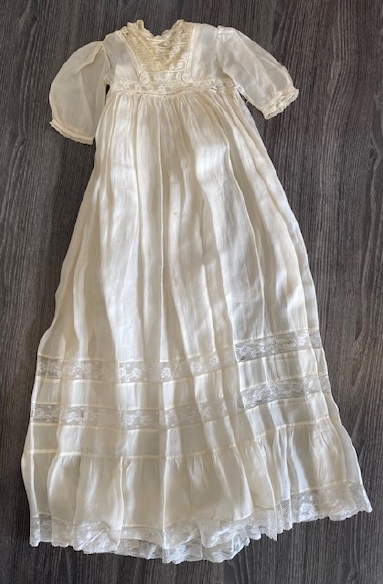
Prompt #1
Christening Gown (KT2017.08.02.01)
The tradition of using special white gowns for infant baptisms dates back to
early Christian practices and became widespread in Europe by the 17th century.
This heirloom gown was first worn by Henry Joseph Macaulay Barnett in 1922
and has since been used by multiple generations.
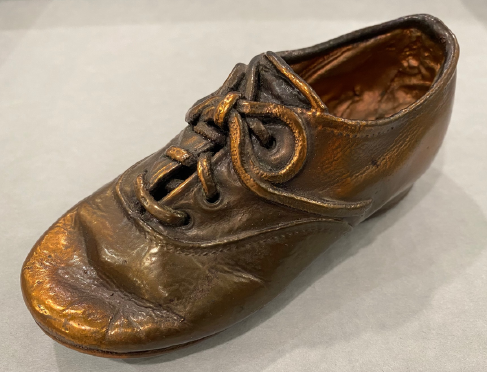
Prompt #2
Bronze Shoe (KT2017.08.02.01)
This small shoe was likely first worn by Velma Hesp (1888–1892) and may have
been used by other family members before being bronzed. Bronzed baby shoes
became a popular North American keepsake tradition beginning in the 1930s,
with the trend peaking from the 1950s to 1970s.
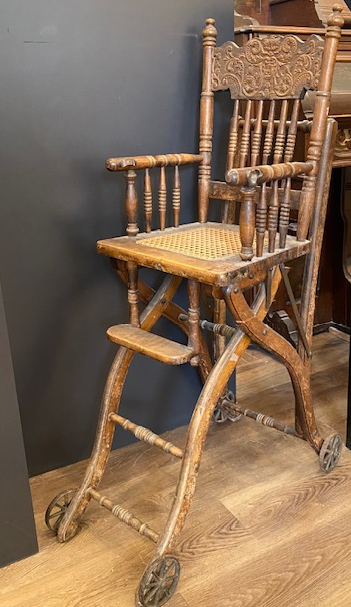
Prompt #3
High Chair (KT983.352)
This elegant high chair converts to a stroller. It was used in King Township by
Elizabeth McClure (later Gillham) about 1909.
Prompt #4
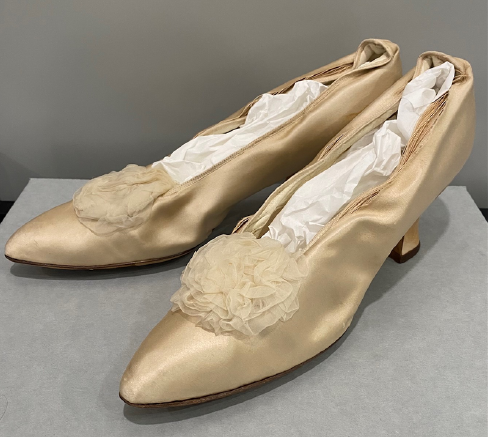
Wedding Shoes (KT2010.10.11 a,b)
Satin wedding shoes said to have been worn by Dorothy Mastin Graham on her
marriage to Sydney Holmes in Toronto, circa 1917.
Prompt #5
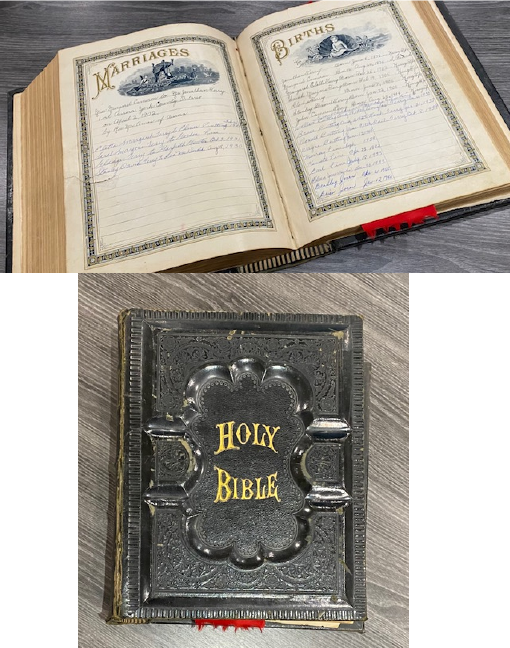
Holy Bible (KT2021.04.01)
Holy Bible owned by the Terry Family of King Township. Bibles were often given
as gifts, for occasions such as weddings, and used to record births, marriages
and deaths in a family over the generations.
Prompt #6
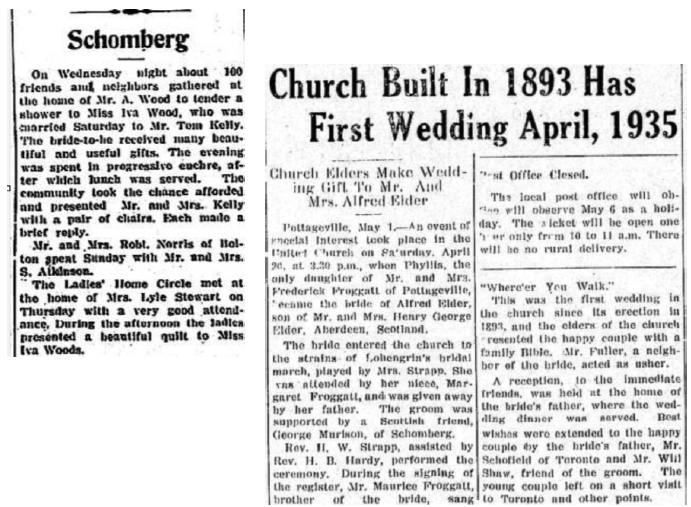
Media Coverage
Before the advent of social media, newspapers reported on personal and family events happening in small communities. Here are two examples about events in King Township.
Prompt #7
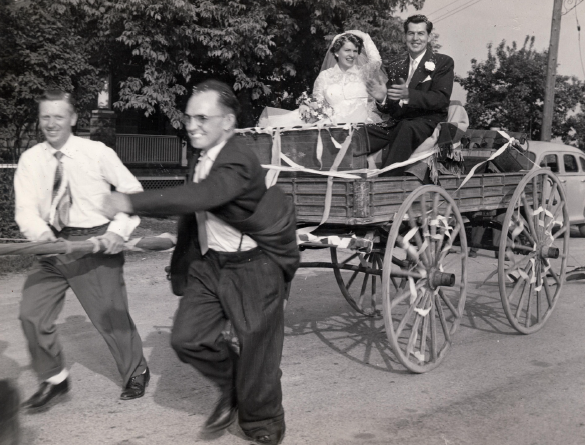
Wedding Wagon (KTA2002.15)
Kenneth Earl Kitchen (1930-2013) was born and raised in Schomberg. He
married Jean Shaw on June 19, 1954 at the United Church in Kleinburg; the
couple were pulled on their wedding wagon by their groomsmen.
Prompt #8
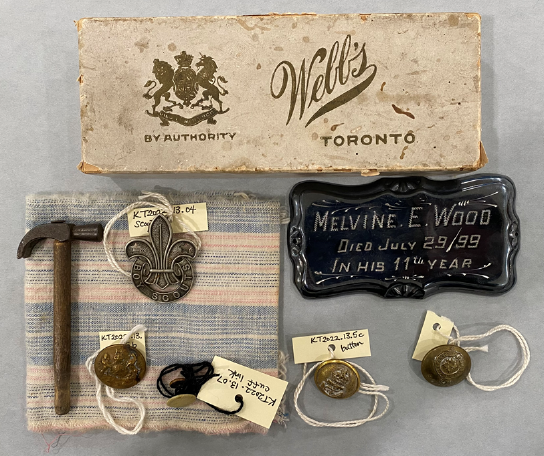
Memorabilia from a Young Boy (KT2022.13)
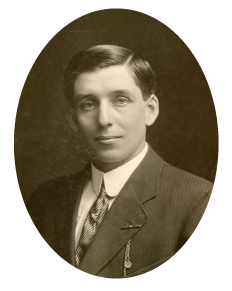
This collection belonged to Melvin E. Wood (1888–1899), whose family preserved the items— including a coffin plate, toy hammer, badge, and buttons—across generations. The donor described the collection as a poignant reminder of his parents’ grief.
Prompt #9
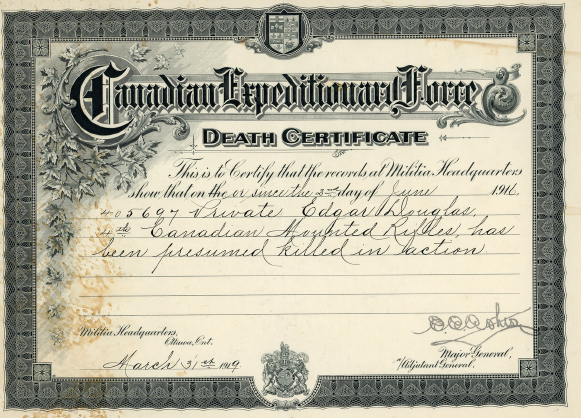
Killed in the Line of Duty (KTA2006.05)
Edgar Douglas, an electrician from Schomberg, enlisted with the 4th Canadian Mounted Rifles in June 1915 and was reported missing during the Battle of Mount Sorrel on 2 June 1916, later presumed killed. With no known grave, he is commemorated on the Menin Gate Memorial and in Canada’s First World War Book of Remembrance, and his death certificate is preserved in the King Heritage & Cultural Centre.
Prompt #10
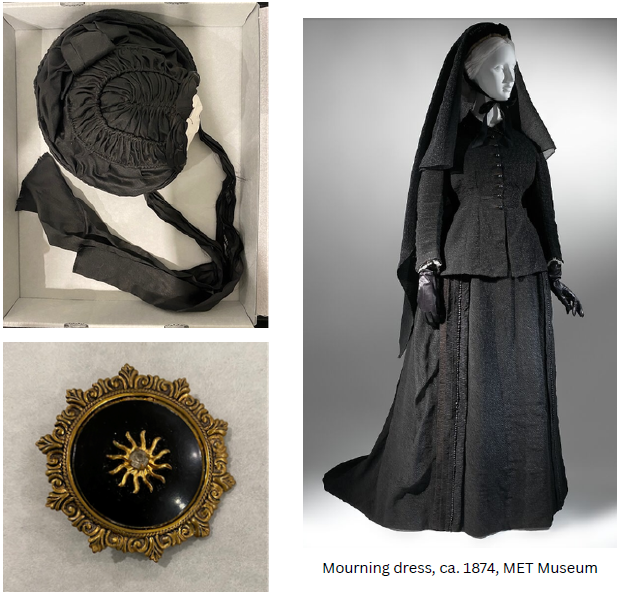
Mourning Attire (KT2001.07.12 and private collection)
Strict mourning customs in the 19th century required wearing all‑black clothing, as seen in this early Victorian bonnet meant for deep mourning. The brooch, likely worn later, would have been unsuitable for deep mourning because only jet or other matte materials were permitted.
Prompt #11
Dead and Buried (KT2024.07.01)
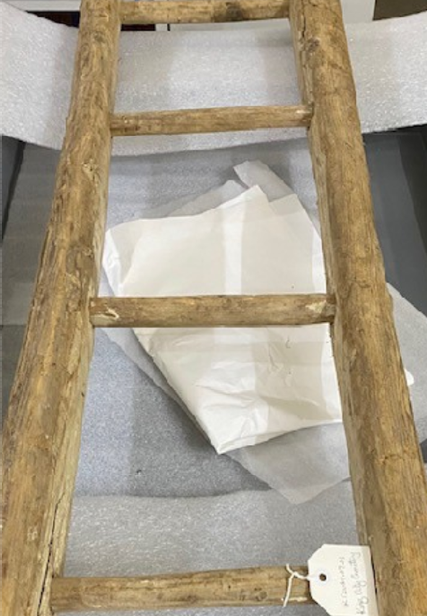
This handmade wooden ladder, dating back to 1887, was used at the King City Cemetery by their grave diggers to climb in and out of the holes dug for coffins. It was known to have been used by local men, Earl Campbell, Jack Walkington and Joe Karabin, among others.
Prompt #12
King Christian Church
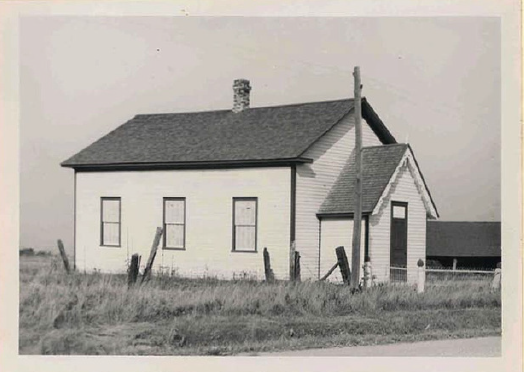
The King Christian Church was built in 1851 on Lot 31, Concession 5 (now Jane Street) near Kettleby, featuring simple Loyalist‑inspired architecture, and was sold to the Emanuel Baptist Church in 1931 as the original congregation declined. After the Baptist congregation dwindled, the building was given to the Township of King in 1978 and moved to the King Township Museum in 1982, where it remains under the care of the King Township Historical Society, now marking its 175th anniversary.